


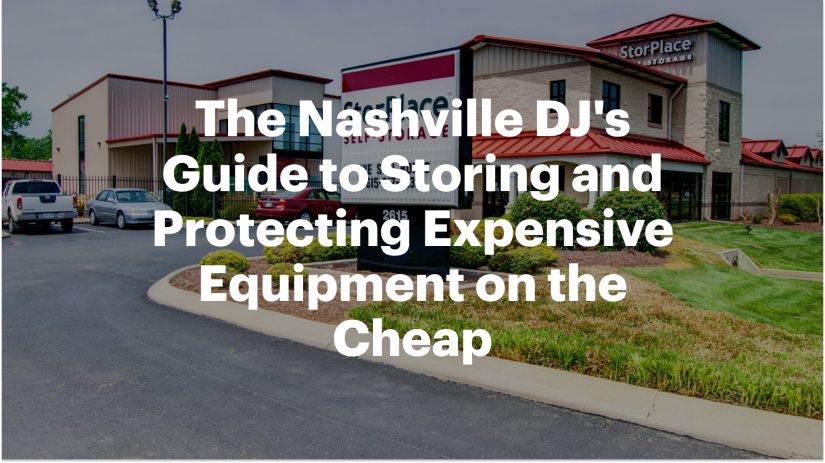


The Nashville DJ's Guide to Storing and Protecting Expensive Equipment on the Cheap
Your CDJ-3000s cost $2,500 each. The mixer ran another $2,000. Add speakers, subwoofers, lighting rigs, fog machines, backup equipment, and that microphone collection, and you're sitting on $20,000+ in DJ gear. Now where do you keep it between gigs?
Most Nashville DJs start storing equipment at home. Turntables crowd bedrooms, speakers occupy living rooms, and road cases stack in garages. This works temporarily until reality hits: your apartment lease prohibits commercial equipment storage, your HOA complains about loading gear at 2am after club gigs, or that break-in down the street makes you realize your entire livelihood sits unprotected in a residential garage.
Professional DJ storage warehouses exist but demand $500-1,500 monthly with annual contracts that terrify mobile DJs booking inconsistent gigs. You need affordable security for expensive equipment without warehouse overhead eating your profit margins.
At StorPlace Self Storage on South Rutherford Boulevard in Murfreesboro, we serve Nashville-area DJs who've discovered the perfect balance: climate-controlled security at self-storage prices. In this blog, we're breaking down exactly how working DJs protect equipment investments without breaking the bank.
Why DJs Can't Just Store Equipment at Home
Home storage seems free until you calculate true costs and risks.
The Security Problem
DJ equipment theft is epidemic. Thieves recognize road case value and target DJs specifically. Your home or apartment offers minimal security. Standard locks delay thieves maybe thirty seconds. No surveillance cameras document break-ins. Neighbors might notice suspicious activity but rarely intervene.
When someone steals your entire mobile DJ setup from your garage, you're not just out $20,000 in equipment. You've lost your income source instantly. Gigs booked for next weekend get canceled. Insurance claims take weeks or months to process. Replacing specialized equipment requires time you don't have.
Professional DJs can't absorb this risk. One theft event destroys businesses that took years building.
HOA and Lease Restrictions
Many Nashville apartments and neighborhoods prohibit commercial equipment storage. Lease agreements explicitly forbid business operations or commercial vehicle parking. HOAs restrict visible equipment, road cases, or commercial activity.
You're loading gear at midnight after a Saturday wedding. Neighbors complain about noise and commercial vehicles. The HOA sends violation notices. Your apartment complex threatens lease termination.
These restrictions make residential DJ equipment storage legally problematic beyond just inconvenient.
Space Consumption Issues
Mobile DJ setups consume substantial space. A complete system includes main speakers, subwoofers, DJ booth components, lighting rigs, effects, backup equipment, cables, stands, and road cases protecting everything.
This equipment overwhelms bedrooms and living spaces. Spare rooms become unusable. Garages fill completely, forcing vehicles outside. Relationships suffer when homes resemble equipment warehouses more than living spaces.
Professional DJs need separation between home life and business operations.
The Math: Why Storage Beats Other Options
Smart DJs calculate true storage costs by comparing all alternatives.
Commercial Warehouse Reality Check
DJ-specific storage warehouses offer 24/7 access, loading docks, and equipment-focused services. But monthly costs run $500-1,500 minimum with annual contracts and additional fees for insurance, access, and amenities.
Annual warehouse costs total $6,000-18,000, representing 20-60% of many mobile DJs' gross revenue. These expenses make sense for production companies running multiple crews with constant equipment movement. Solo DJs and small operations can't justify this overhead.
Self-Storage Economics
Climate-controlled storage units in Murfreesboro, TN, cost $100-200 monthly for 10x10 spaces housing complete mobile DJ setups. Annual costs total $1,200-2,400, representing just 4-8% of typical DJ revenue.
The cost difference between warehouses and self-storage ranges from $4,800-16,000 annually. For working DJs, this difference represents equipment upgrades, marketing investment, or simply profit retained rather than spent on excessive overhead.
Insurance Savings
Homeowner and renter insurance policies typically exclude or severely limit coverage for business equipment stored residentially. Your $20,000 DJ setup might have only $2,500 coverage under standard policies.
Professional storage facilities enable proper business equipment insurance at reasonable rates. Storage facility security features often qualify for insurance premium discounts, offsetting storage costs partially through reduced insurance expenses.
Opportunity Cost Calculations
Equipment stored professionally enables DJs to pursue opportunities impossible with home storage. Last-minute corporate gigs become feasible when you access equipment conveniently. Multi-day events work smoothly with secure storage between dates. Wedding season warehousing prevents home chaos during the busiest revenue periods.
These opportunities often generate revenue exceeding storage costs many times over, making professional storage a profit center rather than pure expense.
What to Look for in DJ Equipment Storage
Not all storage facilities suit DJ equipment needs equally. Smart DJs evaluate specific features.
Climate Control is Non-Negotiable
DJ equipment demands consistent temperature and humidity control. Storage maintaining 50-80°F year-round protects electronics, prevents component degradation, and preserves equipment value.
Nashville's temperature extremes, from humid 95°F summers to freezing winters, destroy equipment in non-climate-controlled storage. The modest premium for climate control costs far less than replacing damaged gear.
Drive-Up Access Saves Labor
Moving DJ equipment means loading speakers, subwoofers, road cases, and lighting rigs. Drive-up storage lets you pull vehicles directly to units, loading efficiently without carrying heavy equipment long distances.
This convenience matters enormously when prepping for weekend gigs or unloading after late-night events. Drive-up access transforms storage from a burden to a seamless operational component.
Security Features Protect Investments
Evaluate facility security comprehensively. Gated access with individual codes tracks entry. Surveillance cameras document activity. Well-lit premises deter theft. On-site management provides oversight. These features collectively protect equipment investments worth tens of thousands of dollars.
Review crime statistics for storage facility locations. Facilities in safer areas with robust security measures justify slightly higher costs through theft risk reduction.
Convenient Access Hours
DJ schedules don't follow 9-to-5 patterns. Friday and Saturday night gigs mean accessing equipment evenings and returning it late at night or early morning. Sunday wedding setups require weekend access.
Evaluate storage facility access hours, ensuring compatibility with typical DJ schedules. Extended or 24/7 access prevents logistical nightmares when gig timing conflicts with facility hours.
Loading Convenience Features
Features like covered loading areas, equipment carts, and elevators make DJ equipment storage practical. StorPlace's covered loading dock protects gear during Tennessee's frequent rain. Available carts simplify moving multiple road cases simultaneously. These amenities transform storage logistics from exhausting ordeals to manageable routines.
Organizing DJ Storage for Quick Access
Smart DJs organize storage units systematically, maximizing efficiency and protecting equipment.
Zone by Equipment Type: Create dedicated areas for speakers, DJ booth components, lighting, effects, cables, and accessories. This organization enables the quick location of specific gear when preparing for gigs.
Protect with Proper Cases: All equipment should stay in proper road cases or protective covers, even inside storage. Cases provide impact protection, dust prevention, and stackability, enabling efficient space utilization.
Cable Organization Systems: Use labeled cable bags or containers to organize cables by type and length. Finding the right XLR or power cable quickly prevents frustrating searches before gigs.
Backup Equipment Separation: Clearly mark and separate backup equipment from primary gear. Know exactly where backup microphones, cables, or controllers live when primary equipment fails mid-gig.
Inventory Tracking: Maintain digital inventories, noting what equipment is stored, serial numbers, and locations within units. This documentation helps with insurance claims and prevents forgetting items during gig prep.
Vertical Space Utilization: Install shelving or use stackable cases, maximizing vertical space. Properly organized storage accommodates complete mobile DJ setups in surprisingly compact units.
Climate-Sensitive Priority: Position most temperature-sensitive electronics in climate-controlled sections, using standard areas for durable items like stands and cases.
Scaling Your DJ Business with Smart Storage
Professional storage enables business growth impossible with home storage constraints.
Equipment Expansion: Storage capacity allows accumulating specialized equipment. Add different speaker systems for various venue sizes. Invest in premium lighting packages. Build backup systems ensuring gig reliability. This expansion becomes feasible when storage accommodates growth.
Multi-DJ Operations: Growing from solo DJ to agency with multiple DJs requires centralized equipment storage. Professional storage facilities provide neutral locations where multiple DJs access shared equipment inventories.
Seasonal Scaling: Wedding season demands different equipment than club residencies. Storage enables maintaining diverse equipment collections serving different markets without cluttering homes year-round.
Equipment Rental Income: Stored equipment can generate rental income for other DJs or events during open dates. Professional storage makes rental logistics feasible while protecting investment equipment between rental uses.
Protect Your Nashville DJ Business Investment
Nashville's entertainment market offers tremendous opportunities for skilled DJs, but protecting equipment investments requires professional storage solutions. Storage units in Murfreesboro, TN, provide the climate control, security, and convenience working DJs need without warehouse expenses that drain profit margins.
Whether you're a mobile DJ building your business, an established entertainer serving Nashville's wedding market, or a club DJ managing expensive booth setups, professional storage transforms equipment management from constant worry to seamless operation.
At StorPlace Self Storage, we understand DJ equipment needs because we work with entertainment professionals. Our facility at 2615 South Rutherford Boulevard offers the climate control, security, and convenience Nashville DJs need to protect investments while scaling businesses. Contact us at 615-617-5456 to discuss storage solutions supporting your DJ business.
Your equipment represents years of investment and your business livelihood. Protect it professionally without breaking the bank.


